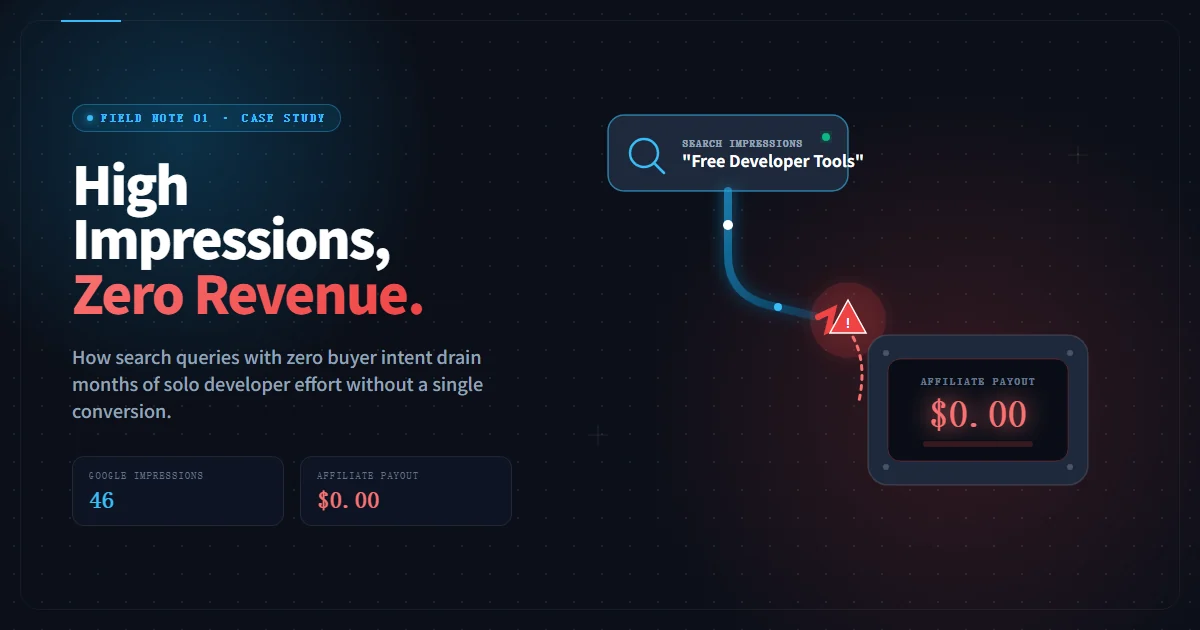
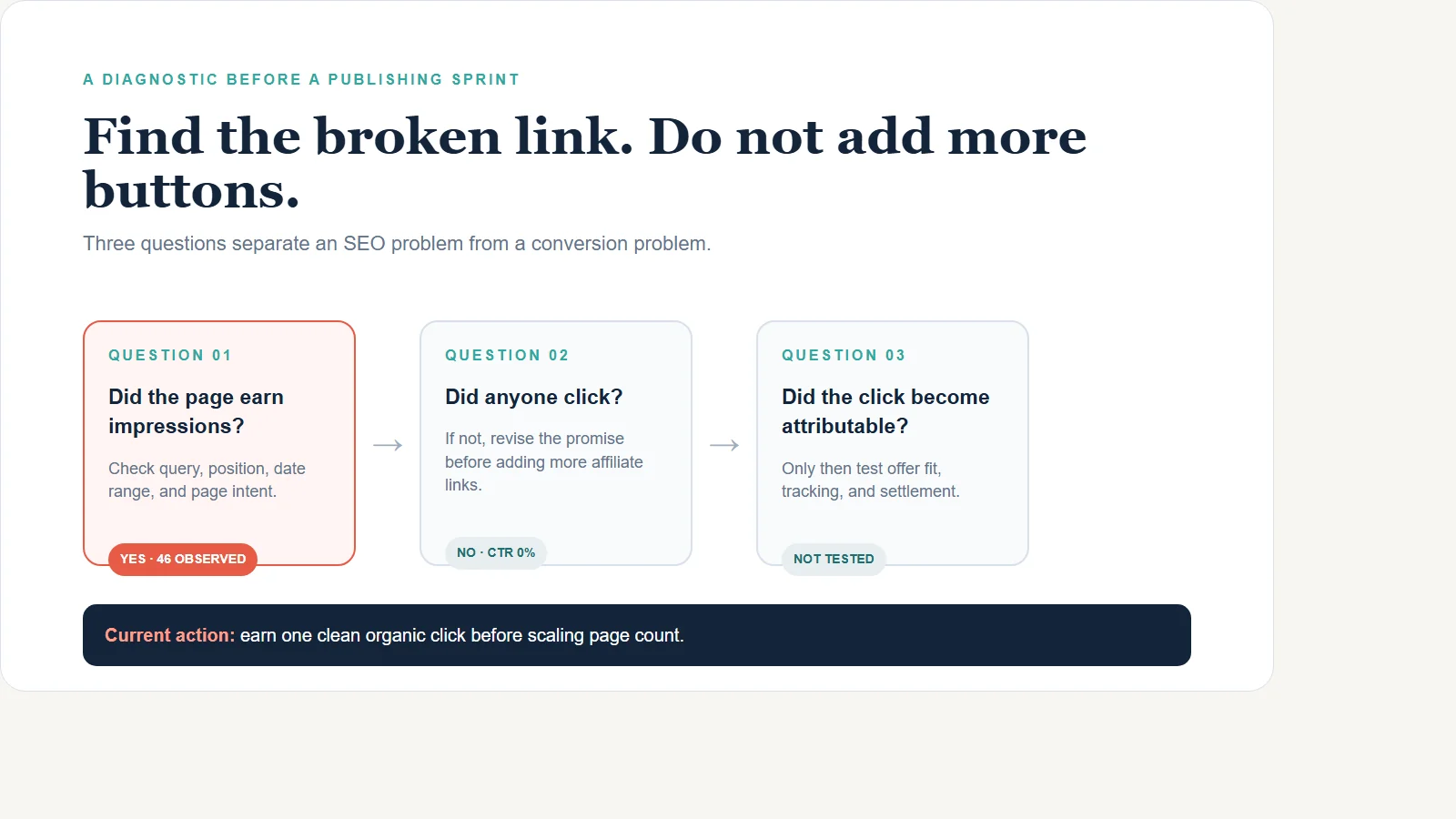
A Google impression is not a visitor, and a visitor is not a commission. My current Hu Qian data makes that separation uncomfortable but clear: the latest 28-day GSC window recorded 46 impressions and 0 clicks. The site had pages, a sitemap, and indexed URLs. It did not yet have proven search acquisition.
That is not a reason to invent a better revenue story. It is a reason to inspect the chain one link at a time.
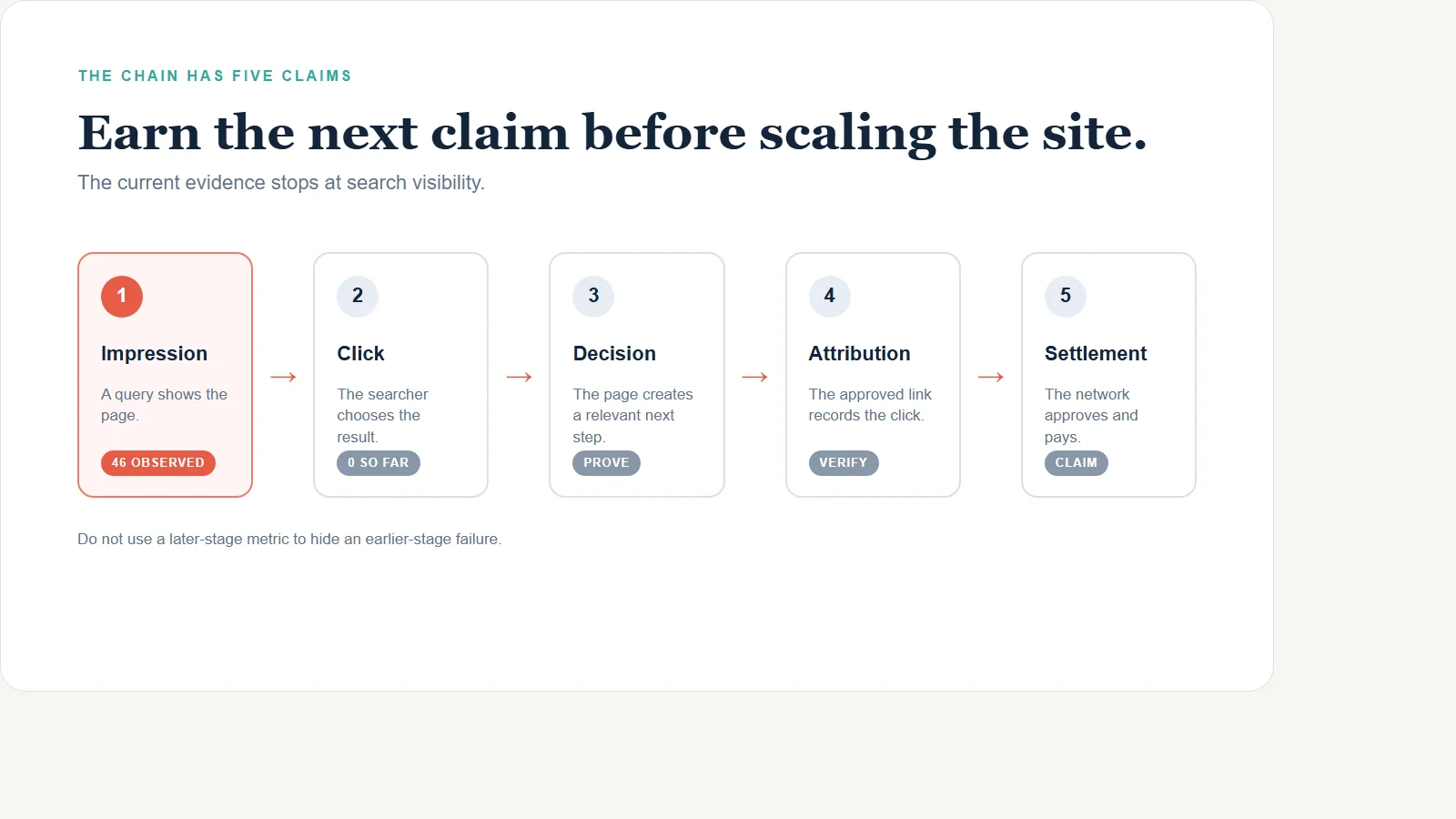
The five-step commercial chain
For an affiliate page, track:
- Demand: a relevant query produces an impression.
- Access: the searcher clicks and reaches the page.
- Decision: the page helps the reader choose an offer.
- Attribution: the outbound link records a qualified click through the approved tracking path.
- Settlement: the advertiser or network approves and pays the commission.
A failure at step one cannot be fixed by adding more affiliate buttons. A failure at step three cannot be fixed by a larger sitemap. A failure at step five cannot be claimed away with a redirect screenshot.
What the current numbers actually prove
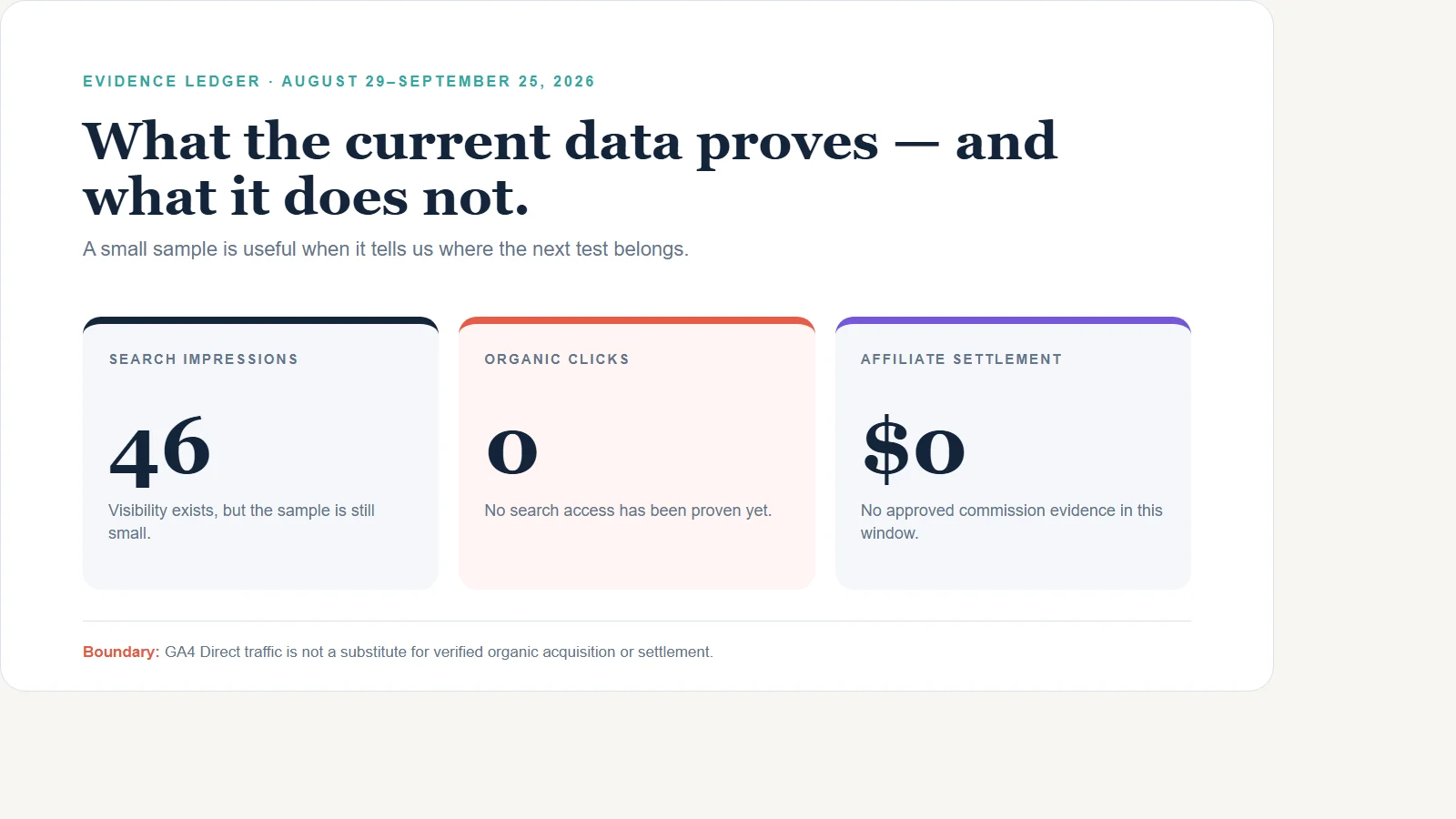
The 28-day GSC snapshot for August 29–September 25, 2026 showed 46 impressions, 0 clicks, a 0% CTR, and an average position of 9.48. Several pages appeared near the first page, including the Cursor comparison, Wix cost ledger, Surfer SEO page, and Fiverr hiring guide. Those are useful ranking signals, but the sample is too small to call them a traffic channel.
The GA4 snapshot for August 30–September 26 showed 429 active users and 489 sessions, but 422 active users came from Direct. Singapore alone contributed 289 users with only two engaged sessions. That pattern is not safe evidence of a real reader audience; it is consistent with crawlers, monitoring, testing, or unattributed traffic. The recent seven-day window contained no affiliate_click and no newsletter_submit event.
The honest conclusion is: the site is instrumented, but organic acquisition and affiliate settlement are not yet proven.
Why impressions can stay at zero clicks
A page can rank and still receive no click when:
- the query is rare or has only one observed impression;
- the title answers a different question from the query;
- the result looks like a generic tool page rather than a useful decision page;
- the brand is unknown and the snippet has no concrete payoff;
- the page ranks for an accidental query with weak commercial intent.
That is why I am tightening titles and introductions on high-ranking pages instead of publishing another batch of thin reviews. The test is whether a clear business-task promise earns a real click.
Why clicks still may not produce commissions
Even a click is not a commission. The reader may compare and leave, use a different device, reject the price, lose the attribution cookie, or reach an offer that is not approved for the publisher. A public URL that opens a clean advertiser homepage may still be a valid tracking redirect, but that must be verified through the redirect and cookie—not inferred from the final address bar.
The page must also give the reader a reason to act. “Try this tool” is weak. A stronger recommendation states who should buy, what task it supports, what it costs, what the stop-loss condition is, and what to do if the tool does not fit.
The safer next experiment
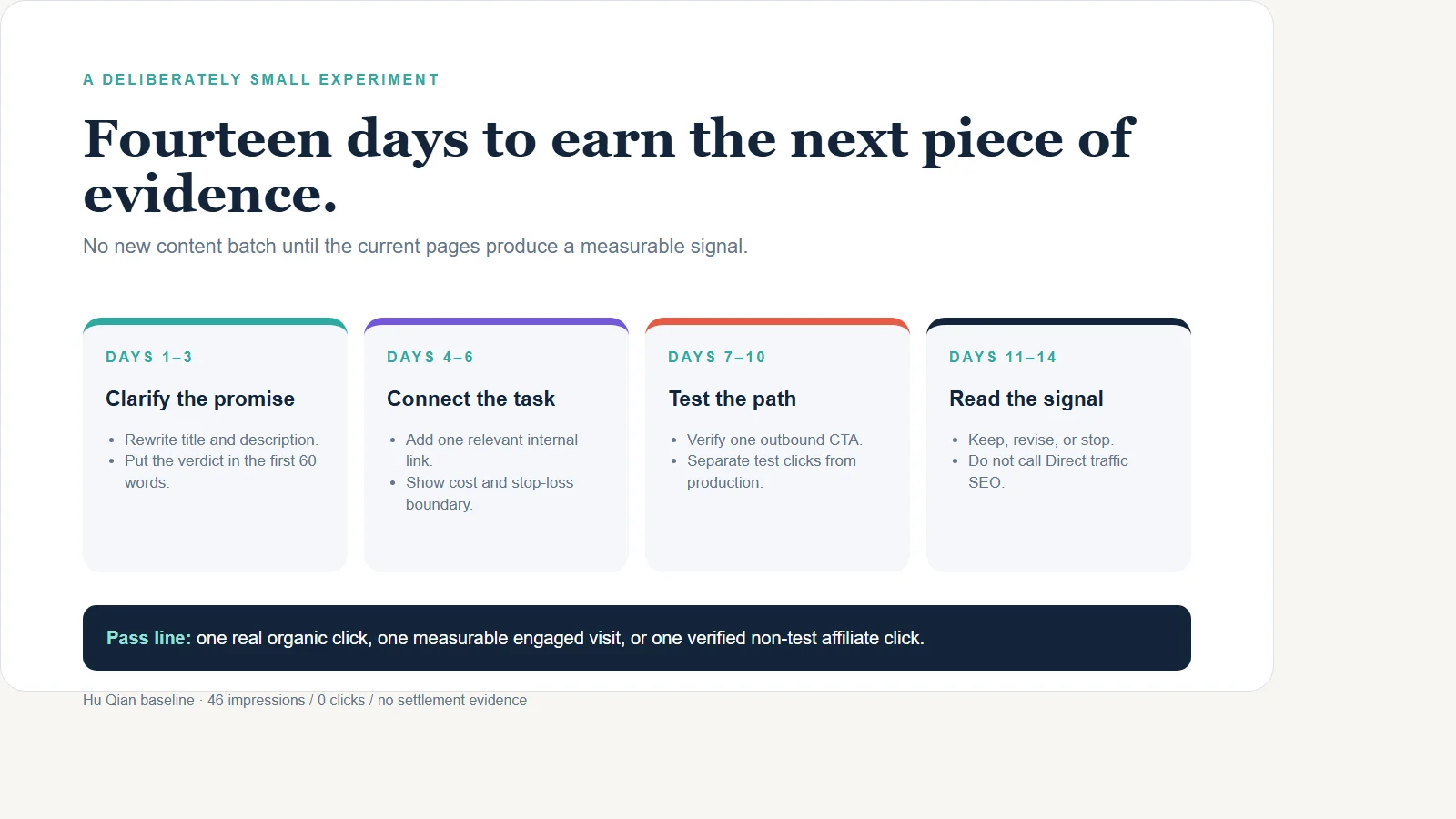
For the next two weeks, do not scale page count. Choose four existing pages with impressions or first-page positions and add:
- a direct solo-business verdict near the top;
- a cost or payback boundary;
- one relevant task-first internal link;
- one verified outbound CTA, clearly disclosed;
- an event test that separates local testing from production clicks.
The pages currently suited to this experiment include the Wix cost ledger, Fiverr hiring guide, Surfer SEO review, and Cursor/Copilot/Claude Code comparison.
Each experiment needs a pass line: at least one real organic click, a measurable engaged visit, or a verified outbound affiliate click from a non-test session. If none appears, revise the offer and distribution before writing more pages.
What not to claim yet
Do not claim SEO traffic from Direct users. Do not claim conversion from a button existing. Do not claim affiliate revenue from an approved offer. Do not call the site validated because the sitemap has been crawled.
The project has crossed the “website exists and can be measured” line. It has not crossed the “repeatable acquisition and settlement” line. That distinction is the useful lesson, because it tells me what to do next: earn the first clean click before optimising for scale.