TimiCC Supported Models: Limits and API Coverage
TimiCC lists 2 models: GPT-4o and Claude 3.5 Sonnet. The platform is built for budget users who accept quirks in exchange for cheap access.
TimiCC lists 2 models: GPT-4o and Claude 3.5 Sonnet. The platform is built for budget users who accept quirks in exchange for cheap access.
TimiCC is 30% cheaper than OpenRouter on Claude 3.5 Sonnet at 10M tokens/month, but only routes two models and requires a QQ email to register..
SSSAICode’s documentation is the best I’ve seen among Chinese relay stations — integration code samples, error code tables, and node routing.
SSSAICode lists 2 models : GPT-4o and Claude 3.5 Sonnet. No DeepSeek, no Gemini, no niche open-source finetunes — just the two workhorses.
SSSAICode is 38% more expensive than OpenRouter on Claude 3.5 Sonnet at 10M tokens/month, but delivers documentation quality that OpenRouter's.
GPT-4o input costs ¥2 per million tokens on SparkCode, with output at ¥15 per million — roughly 60% cheaper than OpenAI's direct China pricing.
100% uptime and 454ms measured latency from Beijing — SparkCode is one of the fastest relay stations I've tested for Chinese developers who need.
SparkCode lists 2 models: GPT-4o and Claude 3.5 Sonnet. That’s a tight roster — no Gemini, no Kimi, no GLM, despite what the platform’s broader.
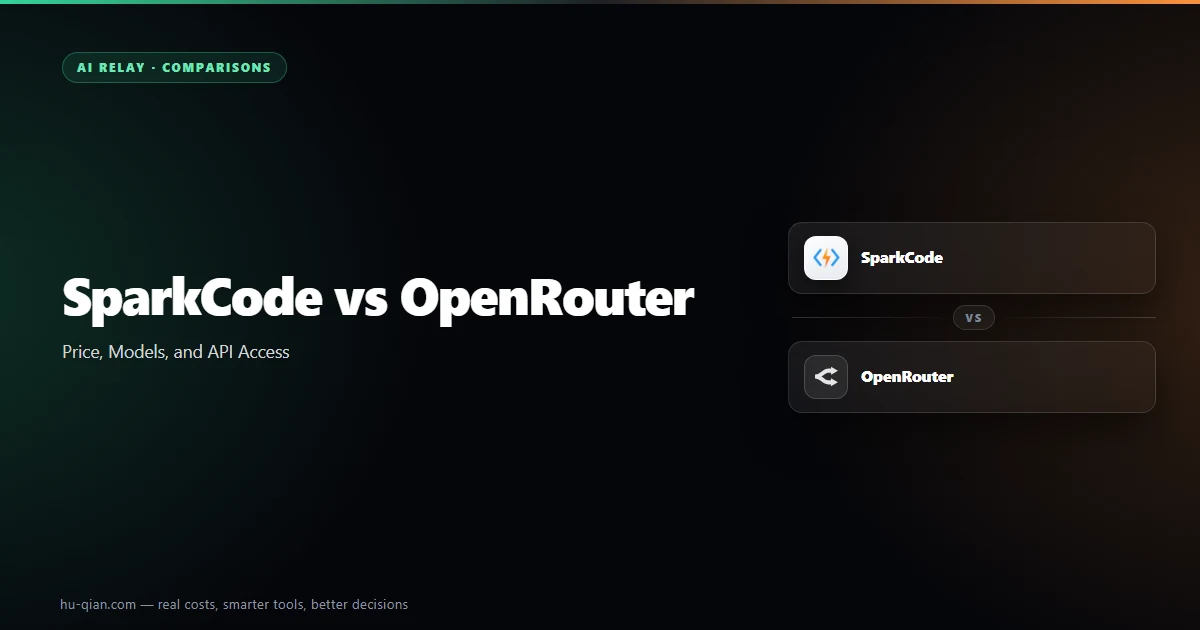
SparkCode is 100% uptime for Chinese users versus OpenRouter’s frequent timeouts from mainland China — and on Claude 3.5 Sonnet at 50M tokens.
Shenma AI's free plan (0 yuan/month) is its clearest advantage. Its actual cost still matters: DeepSeek V3 input is about ¥2 per million tokens.